Enterprise Trust Built into AI Software Creation.
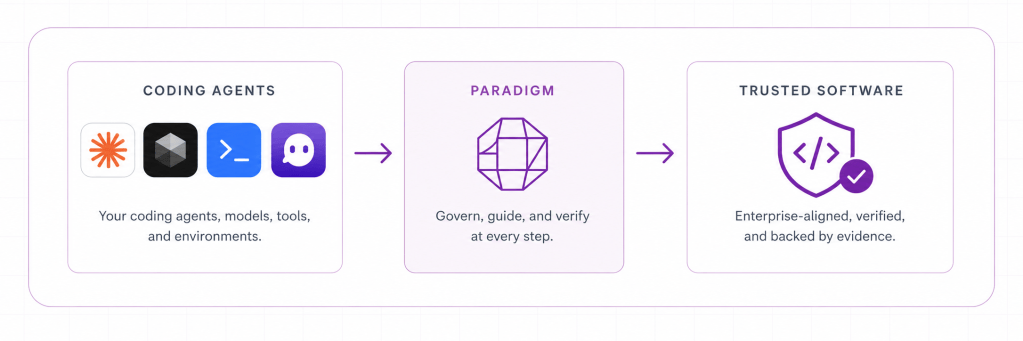
Paradigm applies enterprise controls during coding-agent execution, guides software creation with your requirements, and verifies the result independently of the coding agent. CodeChain connects that evidence across the software lifecycle to establish continuous trust.
Inline Enforcement
Pre-Execution Prevention
Unified Platform
Multi-Cloud Deployment
Multi-LLM Support
Zero Vendor Lock-In
Enterprise Governance
Complete Observability
Inline Enforcement
Pre-Execution Prevention
Unified Platform
Multi-Cloud Deployment
Multi-LLM Support
Zero Vendor Lock-In
Enterprise Governance
Complete Observability
The Key Benefits
Why Enterprises Choose Paradigm
Adopt coding agents with enterprise control, verify the software they create, and manage delivery and cost through consistent governance.

Confidence
Adopt Coding Agents with Confidence
Expand AI-driven development with consistent governance across the coding agents and tools your teams use.
- Govern coding-agent access and actions
- Apply enterprise development policies
- Control model and tool use

DELIVERY
Accelerate Trusted Software Delivery
Use verification evidence and enterprise policies to determine when software can progress or requires intervention.
- Apply enterprise guidance during creation
- Route issues for review or remediation
- Progress software based on trust

Trust
Trust the Software you Ship
Understand how software was governed and verified, with CodeChain preserving the evidence behind continuous trust.
- Verify intent and enterprise alignment
- Evaluate security and policy requirements
- Preserve evidence through CodeChain

Cost
Control AI Coding Costs
Track consumption, attribute spending, and apply usage controls across coding agents and development workflows.
- Measure agent and team consumption
- Allocate costs across coding workflows
- Apply budgets, quotas, and limits
TRUST ACROSS THE AI SDLC
Let Trust Determine How Software Moves Forward.
Continuous trust gives enterprises a basis for expanding coding-agent autonomy while retaining control over software progression.
1. AI Coding Agents
Use your preferred coding agents to create and modify software across your existing models, tools, repositories, and development environments.
2. Paradigm Trust Platform

Govern coding-agent execution, guide creation with enterprise requirements, and independently verify the software. CodeChain connects cryptographically signed evidence into a continuous trust record.
3. Software Ready to Progress
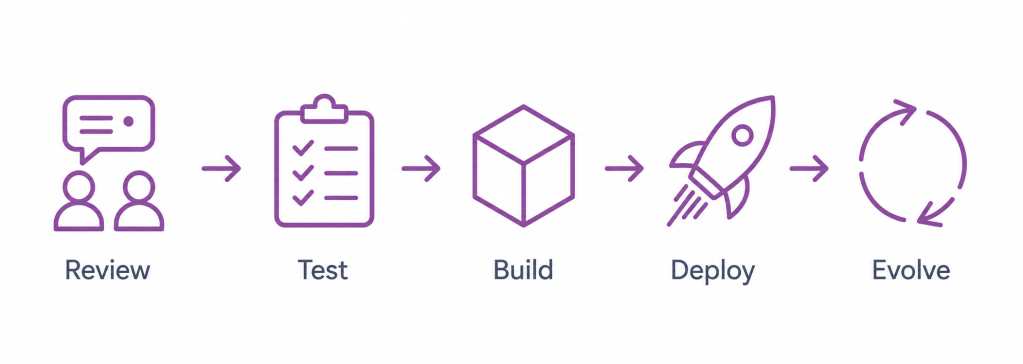
Use continuous trust and enterprise policies to determine whether software can progress, requires human review or remediation, or must be blocked.

Works with the stack you already have
Identity & Access
Okta
Microsoft Entra ID
Google Workspace
Ping Identity
Approved Models
OpenAI
Anthropic
Meta Llama
AWS Bedrock
Self-hosted
Enterprise Context
Snowflake
SharePoint
Confluence
Databases
Vector stores
Google Drive
One Drive
AI Coding Agents
Claude Code
Cursor
GitHub Copilot
Codex
Kiro
Observability & SIEM
Splunk
Datadog
ExaBeam
AI-SPM platforms
Deployment Options
SaaS
VPC
On-prem
Hybrid
Sovereign
Air-gapped
Questions We Get
Not sure? Start here.
The objections buyers arrive with answered.
Trust the Software Your Coding Agents Create.
See how Paradigm governs coding agents, guides software creation, and independently verifies the result. CodeChain connects the evidence into continuous trust that evolves with the software.